Role
Concept Lead & UX Designer
Duration
3 days
Tools
Figma Make, Figma Design & FigJam
Type
Wearable + app
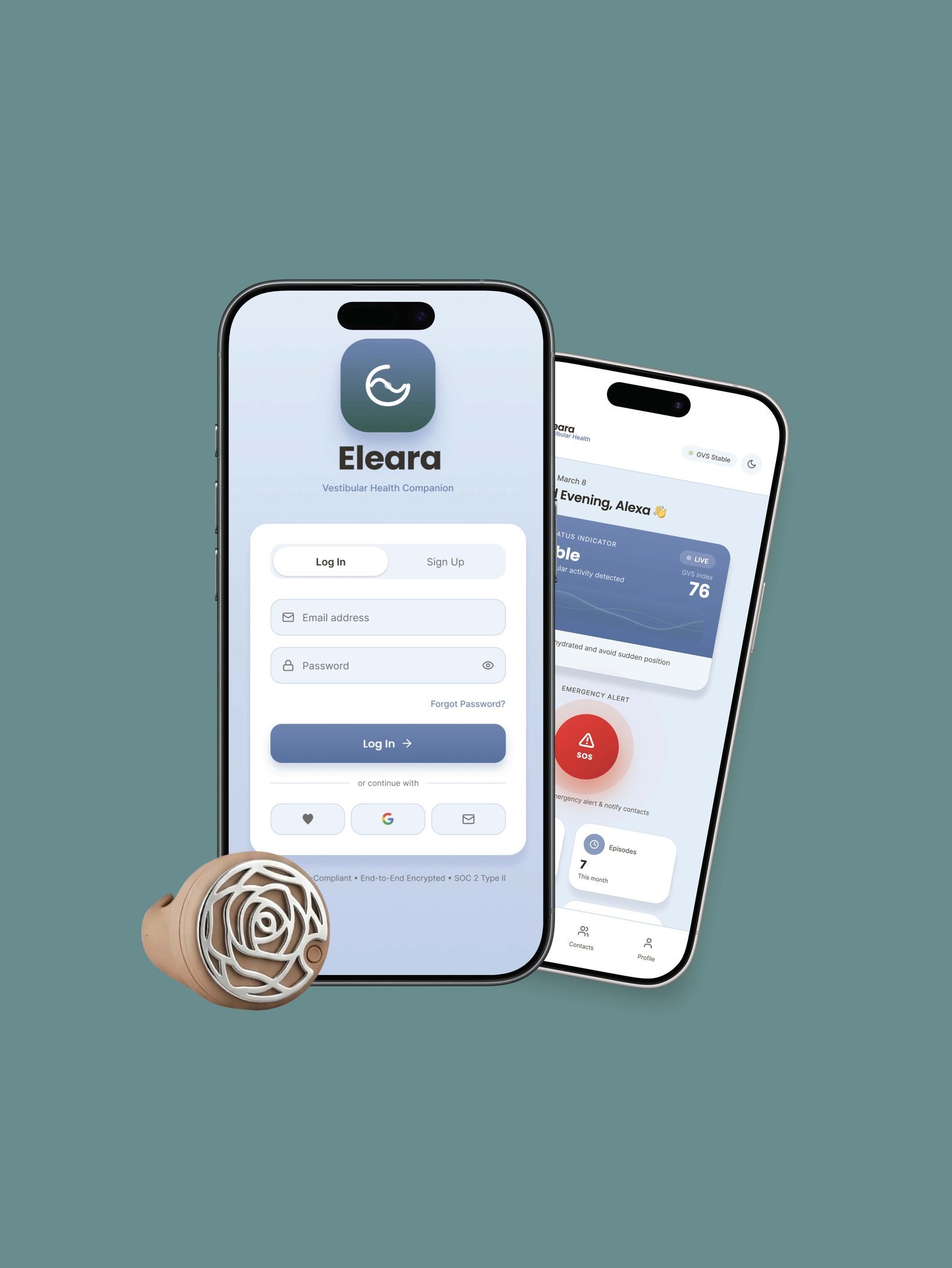
Eleara vestibular companion: two phones and a behind-the-ear wearable
Scroll

A predictive
vestibular companion

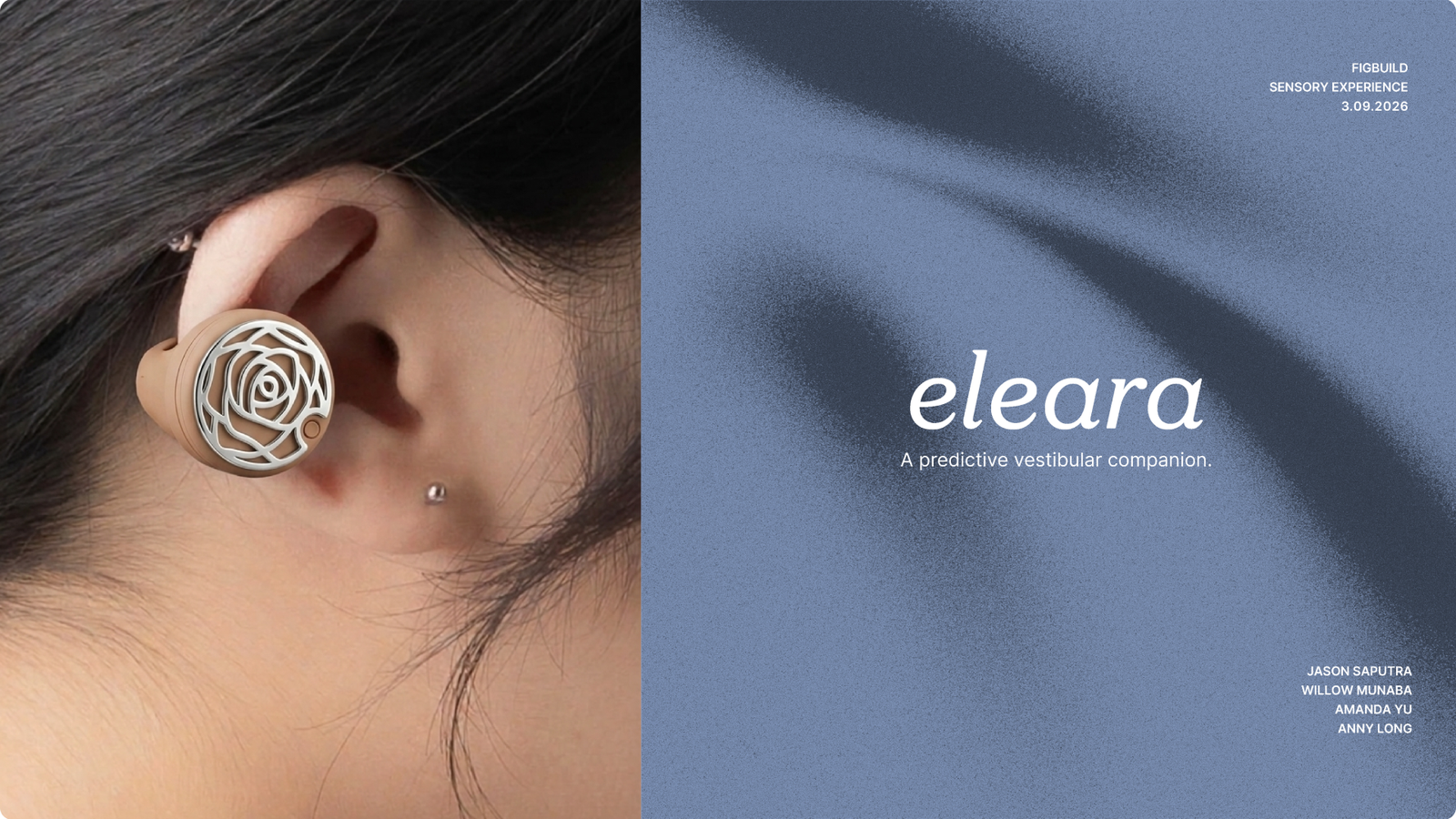
Eleara was designed to address the unpredictability of sudden dizziness by translating complex sensory signals into clear, real-time support — a behind-the-ear wearable with a mobile app that monitors motion, posture, and stability to detect early signs of imbalance.

Eleara app on two phones beside the rose-motif ear wearable

Context

Overview

Eleara is a wearable with an integrated app that monitors body signals to detect early signs of dizziness, helping users maintain balance and reduce the risk of instability. When risk increases, the system can trigger vestibular stimulation to help stabilize the user’s sense of balance in the moment.

My Role

I initiated the core concept and naming of Eleara. I wrote the PRD, mapped the user-flow journey, and co-designed wireframes in Figma — translating research on vestibular mismatch into a usable interface with peers in a three-day sprint.

Timeline

Three days. Secondary research, FigJam brainstorming, Figma Make drafts, then a high-fidelity companion app and wearable form — from problem framing to a testable interface.
Project brief

The ask

How might we warn someone before a dizziness episode, and reach an emergency contact, without adding anxiety to an already stressful health experience?

Vestibular disorders are invisible and episodic. The gap between clinical visits and daily life is wide. Stakeholders include the wearer, clinicians, and family or caregivers who may receive alerts when risk rises.

The challenge

Instability is sudden. The interface has to stay readable while the user is disoriented — large type, calm color, explicit next steps.

Trust

Users need to understand what the device is doing, when it will intervene, and who gets notified — without making the experience feel punitive.

Design

Clarity when it matters

The work focused on turning biometric noise into actions someone can take while an episode is coming on.

  • Status first — a live GVS indicator and a clear “Stable” (or not) state sit at the top of home, so the most important signal is the first thing you see.
  • Emergency without hunting — a prominent SOS control, plus alerts to the user and their emergency contacts before an episode.
  • Caregiver network — contacts and episode history so the wearer is not the only person holding the information.
  • Reduced cognitive load — fewer competing blocks, calmer color, and next steps written in plain language.

Feedback from a first-pass review asked for more color distinction between GVS score, episodes, trend, and stability — and for a reminder when dehydration is a likely cause. Those notes sat next to what already worked: the status color, the episode list, and “easy to navigate, simple and not clunky.”

Hi-fi review, wireframes from the PRD, and the end-to-end flow.

Process

A first prompt that tried to be a hospital

The opening Figma Make brief asked for a HIPAA-style portal, dark mode, SEO, and a two-column Apple-system layout. It was too much for a three-day companion. We cut back to home, alerts, contacts, and a wearable the user would actually wear in public.

Flow before screens

I mapped onboarding through daily monitoring, alerts, and emergency support in FigJam, then iterated wireframes with the team. Battery life, skin contact, false positives, and the social weight of a medical device in public stayed on the board the whole time.

Result

A sprint you can hold

The three days ended in a named concept, a behind-the-ear form, and a companion app that puts status, SOS, and caregivers in reach. Early review praised the status color and episode history, and asked for clearer separation between the dashboard metrics.

[TODO: add result metrics for Eleara]

Takeaways

What I’ll carry forward

Scope is a safety feature

A dizziness companion cannot also be a hospital portal. Cutting the first prompt is what made Eleara usable in three days.

Read it while disoriented

If the status block is the only thing someone can parse, it has to be the loudest, calmest thing on the screen.

Name it, then share it

Owning the concept and the name made the sprint coherent — then the flow and the wearable had something to belong to.

Eleara title frame: behind-the-ear wearable and the line A predictive vestibular companion
Next project Sona